


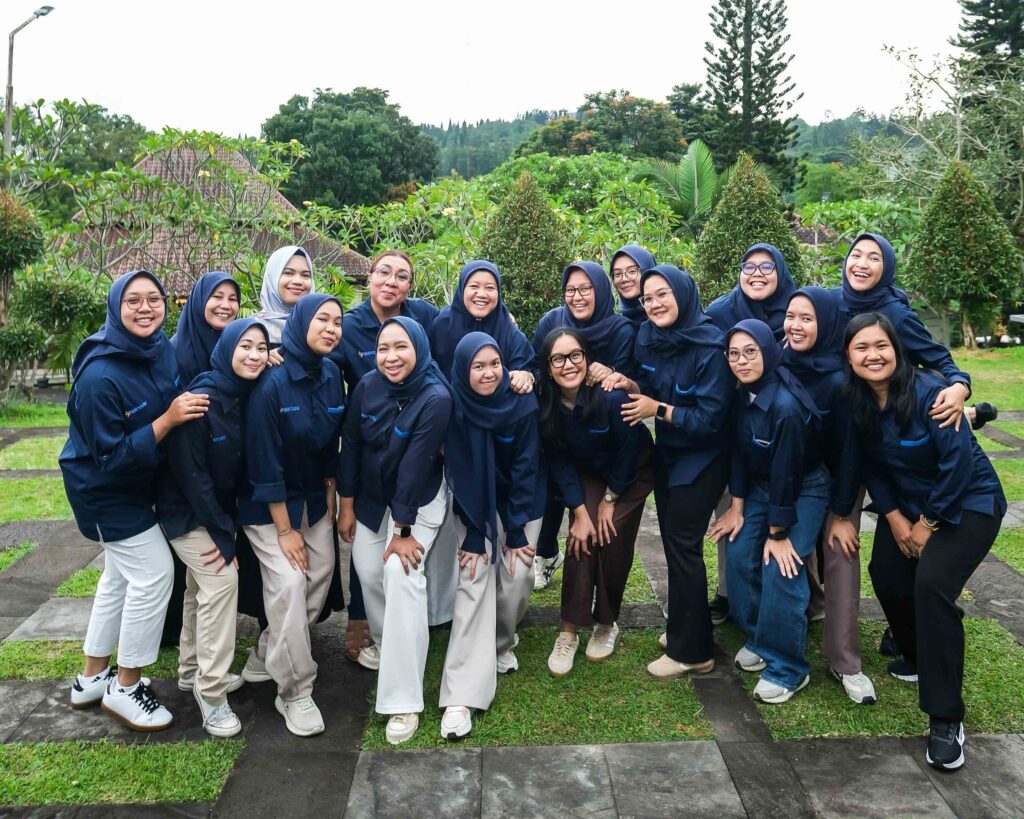
Success in the engineering and construction industry is not determined solely by technical capability, but also by the quality of collaboration, diversity of perspectives, and a team’s ability to make well-rounded decisions. MIPCON Group believes that diverse viewpoints are a key element in building adaptive and sustainable team performance.
In this context, the role of women is becoming increasingly relevant. Women’s participation in the engineering and construction industry continues to grow, although it remains relatively limited in proportion. Data shows that in 2023, women accounted for approximately 16% in engineering and architecture, and around 34% of the total workforce in STEM (Science, Technology, Engineering, and Mathematics).
In the construction sector, the figure is even lower, with women representing only around 10.8% of the workforce. This reflects an industry that is still largely dominated by men, particularly in field-based technical roles.
Despite this, there is a notable trend where many women in the industry hold strategic positions. Around 44% of women work as construction managers or in other professional management roles, highlighting their significant contribution to planning, coordination, and project management.
Behind these contributions, women in engineering and construction continue to face various structural and cultural challenges.
One of the primary challenges is the stereotype surrounding physical capability, where construction work is often associated with physical strength and perceived as more suitable for men. This perception can create barriers for women to engage more broadly in technical field roles.
From an operational perspective, the nature of construction projects requiring long working hours, high mobility, and dynamic job sites also presents challenges, particularly for women balancing multiple roles in their personal lives.
Nevertheless, women’s presence brings tangible contributions to the industry.
Organizations with higher levels of diversity have been shown to achieve better innovation performance, with innovation-related revenue reaching up to 19% higher. In addition, companies with strong gender diversity are 25% more likely to achieve above-average profitability.
In practice, women contribute significantly to:
The impact of women’s contributions extends beyond individuals or teams, influencing the industry as a whole.
Diversity within teams has been proven to:
Therefore, women’s participation plays an important role in advancing the engineering and construction industry toward greater adaptability and competitiveness.
In line with these developments, MIPCON Group recognizes the importance of women’s roles in supporting optimal team performance.
Women at MIPCON are involved across various functions, including engineering, project management, and supporting roles, contributing to ensuring that each stage of work is carried out effectively, in a coordinated manner, and in accordance with established standards.
“Diverse perspectives strengthen decision quality and drive optimal team performance.”
Through these contributions, women play an essential role in fostering a collaborative, professional, and inclusive work environment.
MIPCON Group remains committed to building a professional, inclusive, and collaborative workplace as part of its effort to deliver reliable and sustainable industrial solutions.
Learn more about MIPCON Group’s services and experience through our official website at mipcon.co.id or follow our latest updates on Instagram @mipcon.
Published on April 21, 2026 | By Muhammad Fahmi Febrianto